by Jovana Stanković
photo: Stefan Zdraveski
On the second evening of the 29th Art Trema Fest, the play Nora’s House was performed, based on the text by Džale Karabekir, directed by Yeşim Koçak and the author herself, and brought to life by Pelin Oruč. Produced by Teatar Bojali Kuš, the play takes Henrik Ibsen’s A Doll’s House as its starting point, relocating its meaning from a literary-historical context to a contemporary social one.
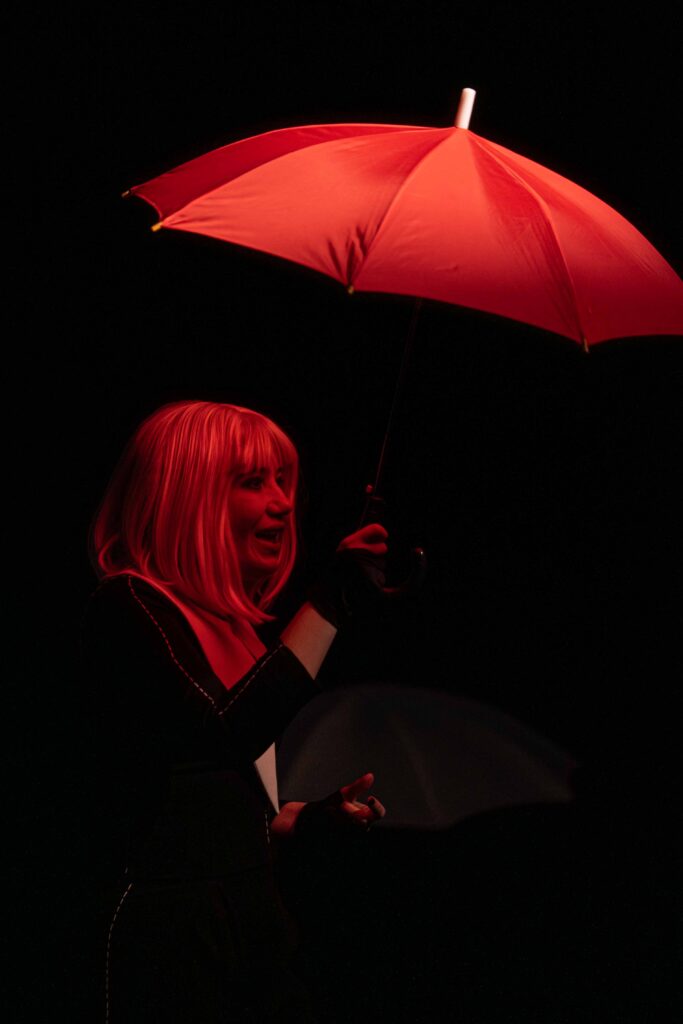
Karabekir uses Nora’s house as a powerful symbol of a woman breaking free from patriarchal constraints—but in a very unconventional way. The main character is placed in the role of a commercial agent selling the very house in question. The first part of the play functions as an advertising narrative: cold, utilitarian, and stripped of emotion, while clearly showing the character’s discomfort with her role, both professionally and socially. This opening segment builds a tension of suppressed energy, which, according to dramatic logic, should eventually explode into a visible act of resistance. Yet, that explosion never fully happens—or at least not in a way that creates a dramatic turning point. The heroine only speaks when the power goes out and the security cameras stop recording, that is, when she is outside the system’s gaze. She talks about her discomfort, her work for corporate men, and her sense of entrapment, but the way she leaves this space is almost identical in expression to the beginning. The play lacks a clear transformation, and the impression of courage or a real breakthrough is muted.
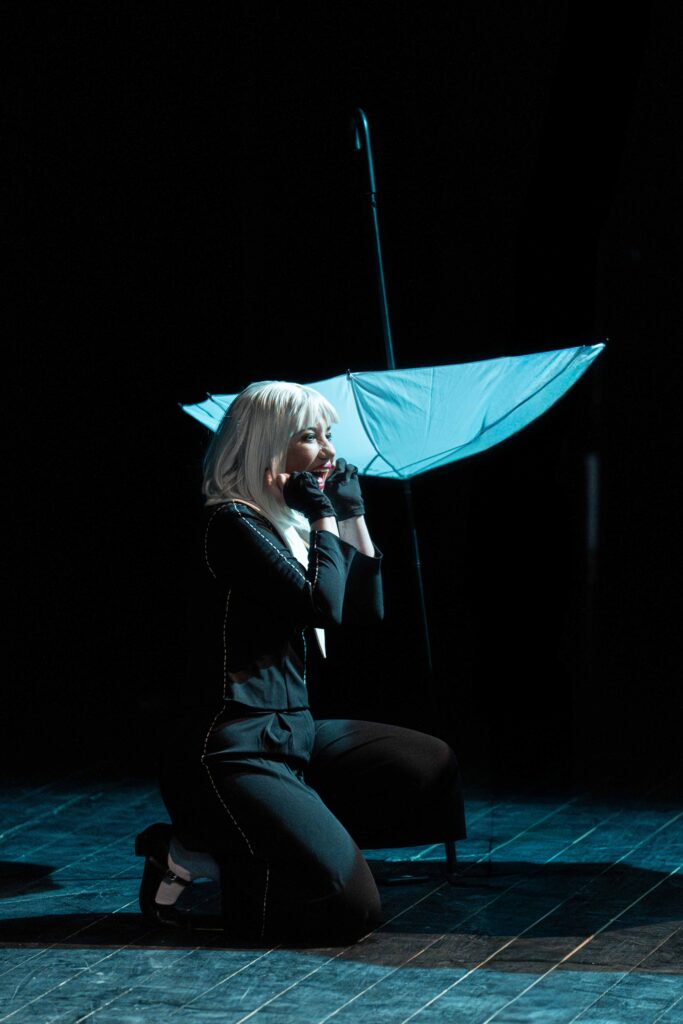
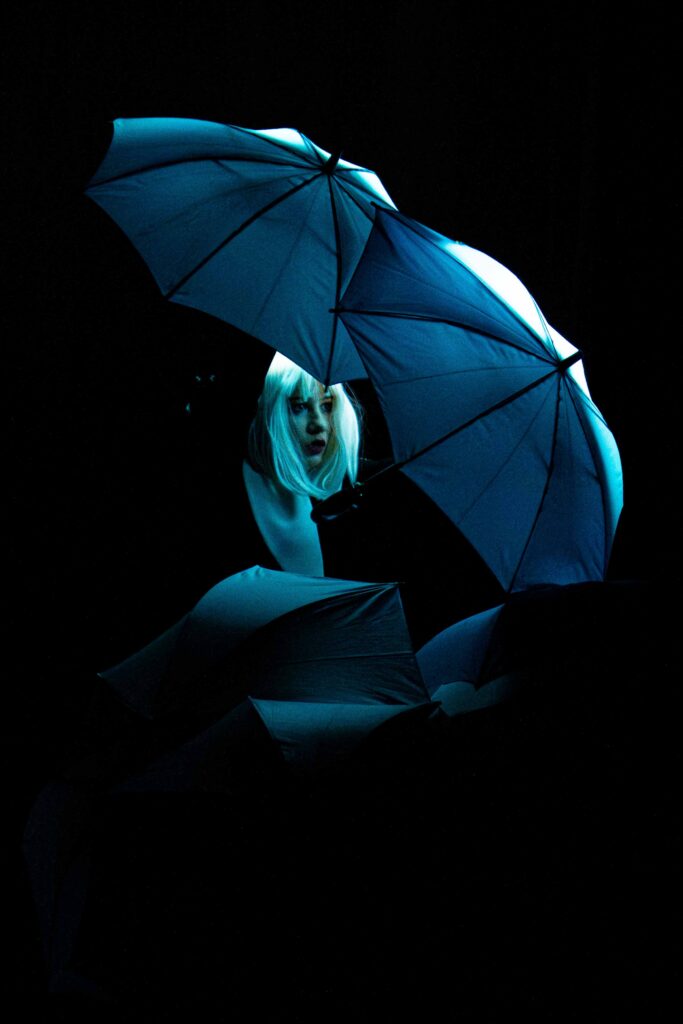
A key stage element is the constant dripping of water, audible throughout the performance, giving the impression that the house is slowly filling and that the heroine may eventually drown. This soundscape serves as a clear metaphor for women’s position in a patriarchal society, constantly asking: which drop will finally make the glass overflow and trigger a real fight for equal rights? The symbolism is precise and readable, but it remains more suggestive than a fully developed stage conflict. The set features white umbrellas, visually dominating the space, yet without a clear functional or symbolic purpose. Their presence feels ornamental, creating the impression that the play could work even without them—perhaps more effectively, in a stripped-down, direct form addressing the audience.
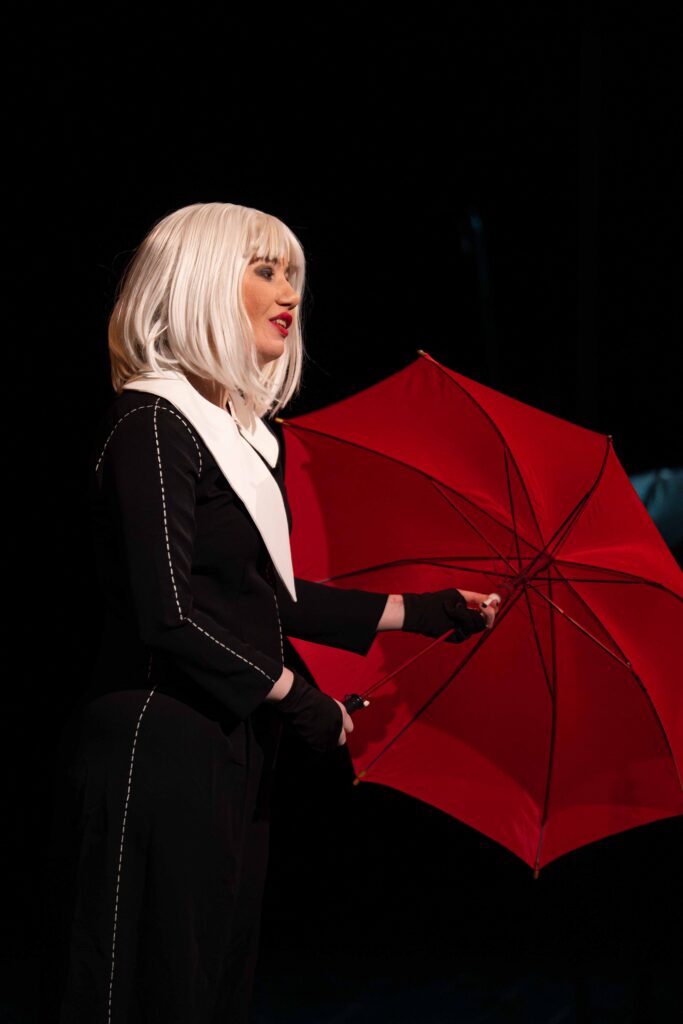
The text itself is full of familiar feminist statements—phrases repeated for years that, like birds on a branch, increasingly fail to translate into real social change.For an audience coming from a context where these issues are constantly discussed but little changes in practice, these messages may feel worn out or insufficiently powerful.However, viewed in the context of its creation—in Turkey, where it is performed, and considering the real status of women in that society—the play takes on a very different weight. Here, it is indeed a courageous theatrical act, whose value is primarily sociological, and only secondarily artistic. The tension between universal feminist discourse and the local social context gives the play both its greatest significance and its main limitation.
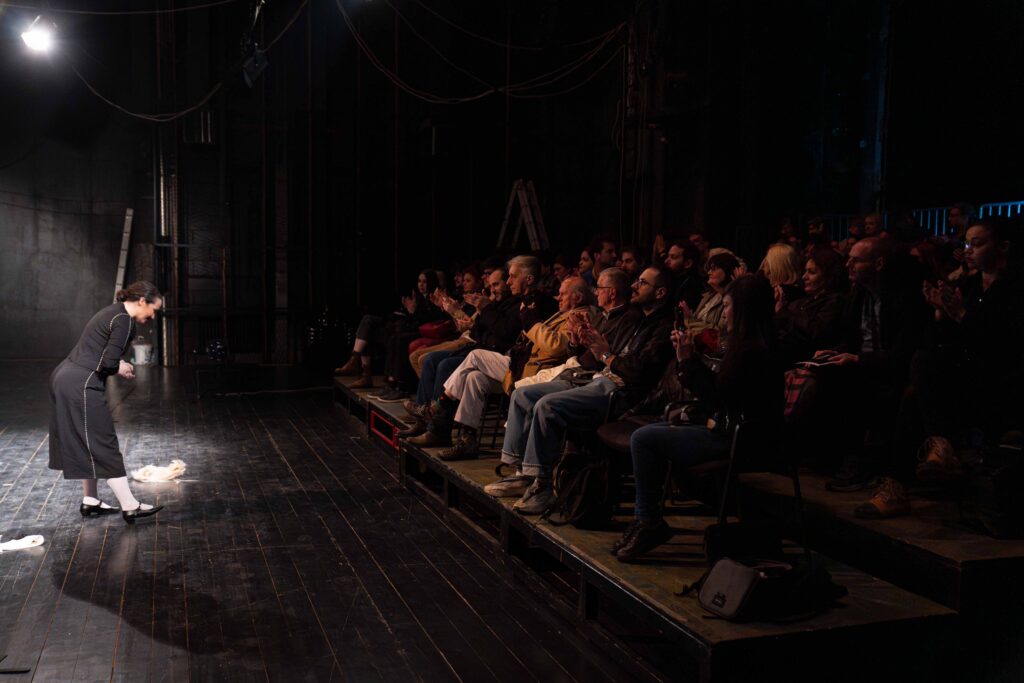
Nora’s House
Written by Jale Karabekir
Directed by Yeşim Koçak and Jale Karabekir
Performed by Pelin Oruç
Produced by Teatar Bojali Kuš, Turkey
The “Criticism” Programme is an initiative by Spam Studios, developed in partnership with Art Trema Fest as part of its 29th edition, and carried out with the financial support of the “Culture for Democracy” programme of the Swiss Embassy and the Hartefakt Fund in Serbia.