by Nikola Stanishic
photo: Stefan Zdraveski
On the fifth day of the 29th Art Trema Fest, the play Drowning Ophelia, based on the text by Rachel Luann Strayer, was performed by a Bulgarian ensemble. The production, directed and designed by Anastasia Dimitrova, explores trauma through a fusion of physical theatre, movement, and visual symbolism, performed entirely in English.
Starting from the motif of Ophelia as an archetype of internal suffering, the performance develops a stage language in which the body becomes a site of memory, and movement serves as a means to uncover repressed past experiences. The narrative unfolds subtly through the gradual introduction of characters and a minimalistic costume palette—black for the men and skin tones for the women. Through repeated movements, it becomes evident that Jane (Anastasia Dimitrova) is trapped in the past due to the trauma she endured. Ophelia (Neda Aleksov) and Jane establish a relationship that functions as a dialogue between consciousness and the subconscious, while Edmund (Stefan Gjurov) and Adam (Georgi Petkov) embody the masculine principle that drives conflict.
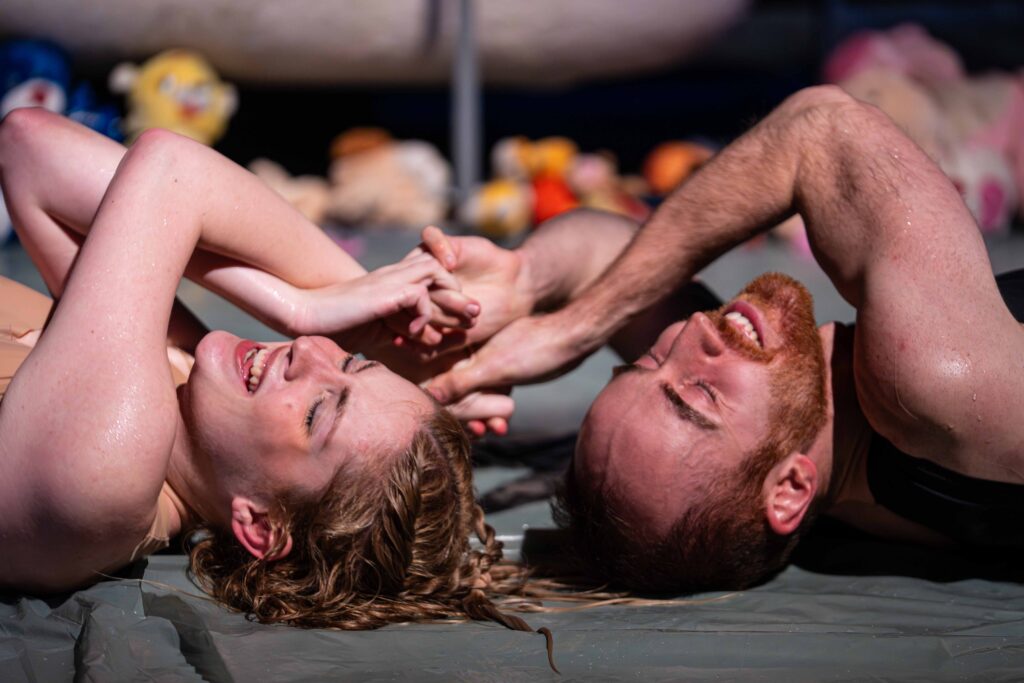
The use of red light and screaming reveals the truth about sexual violence committed by her brother and a murder that remains a permanent scar in her memory. The trauma is not expressed verbally but is experienced physically, as the body repeats the same patterns, affirming the central idea of the play: the skin remembers everything.
One of the key stage elements is a tub filled with water, which changes temperature during the performance, creating an additional physical challenge for the performers. Plush toys beneath the tub indicate that the character is a young girl rather than an adult woman, further concretizing the trauma. Occasional dialogue with the audience takes on a poetic tone, opening space for empathy, while the precise choreography by Gjordjia Niamova and lighting design by Aleks Iliev and Victoria Taneva contribute to an atmosphere of internal fracture, accompanied by the music of Maria-Viktoria Mitova.
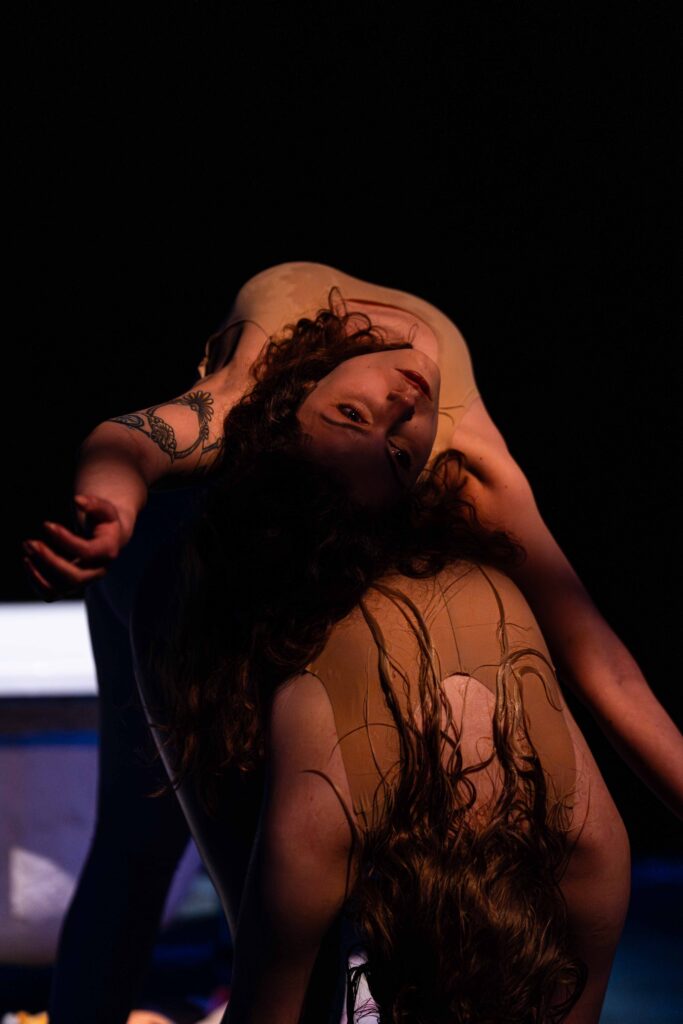
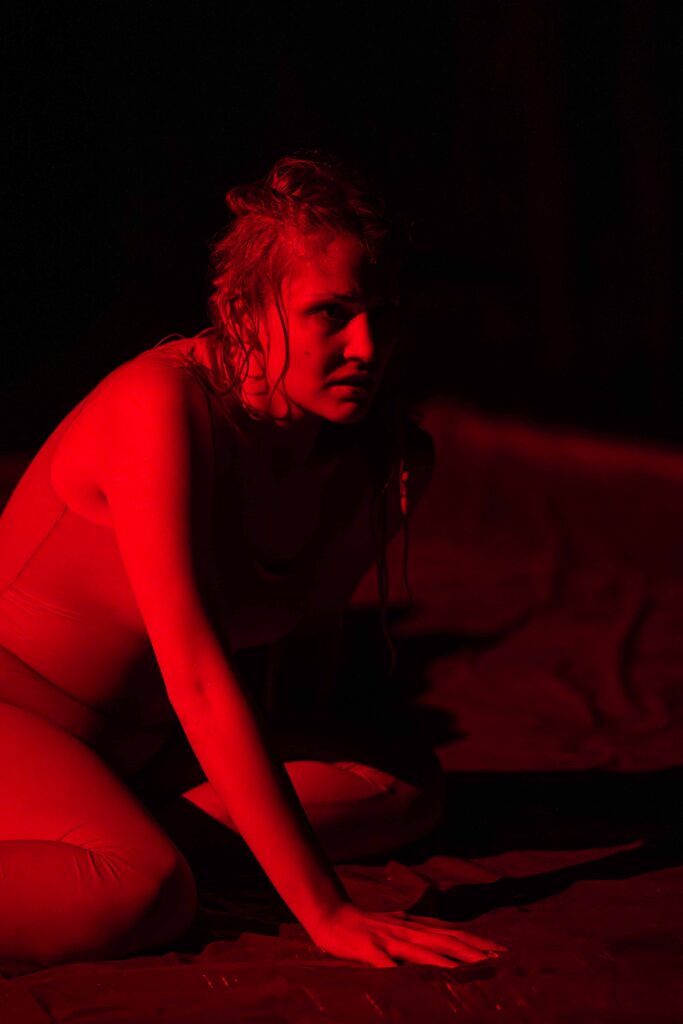
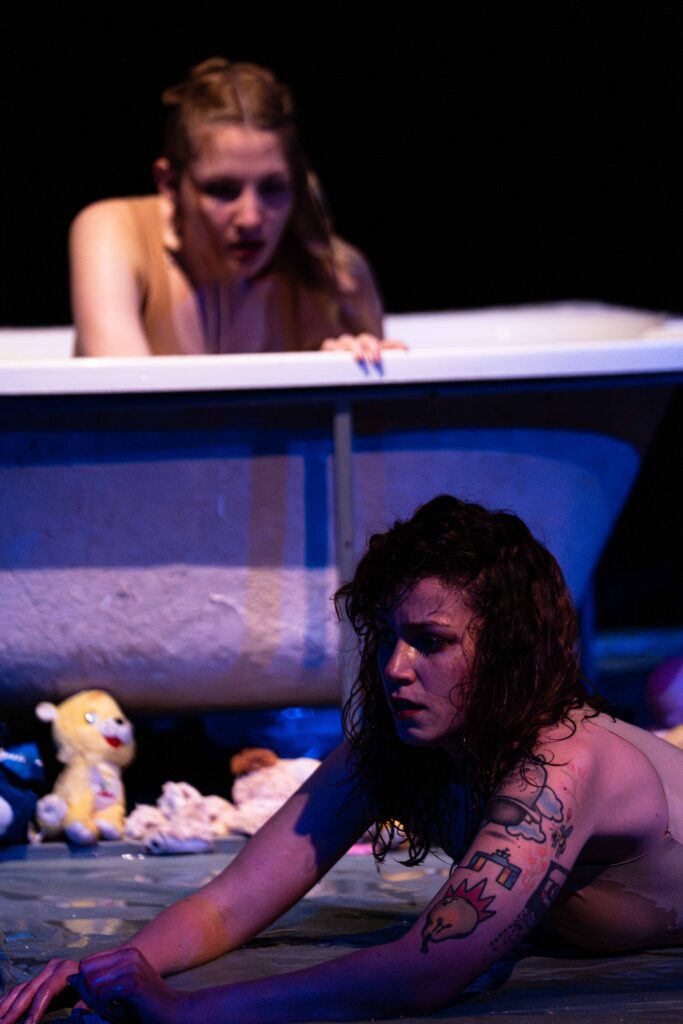
However, the performance has certain technical shortcomings. Stefan Gjurov’s voice was at times not loud enough, even when close to the audience, which affected the clarity of character relationships. The hanging costumes on stage, aside from the red dress, were underutilized, and the plush toys remained illustrative rather than actively part of the action.
Drowning Ophelia delivers a clear visual and emotional expression in which trauma is relived repeatedly. The direction and choreography establish a strong stage language, and the ensemble’s precise and dedicated performance builds a complex relationship between body, memory, and subconscious, leaving the impression of a mature and thoughtful festival production.
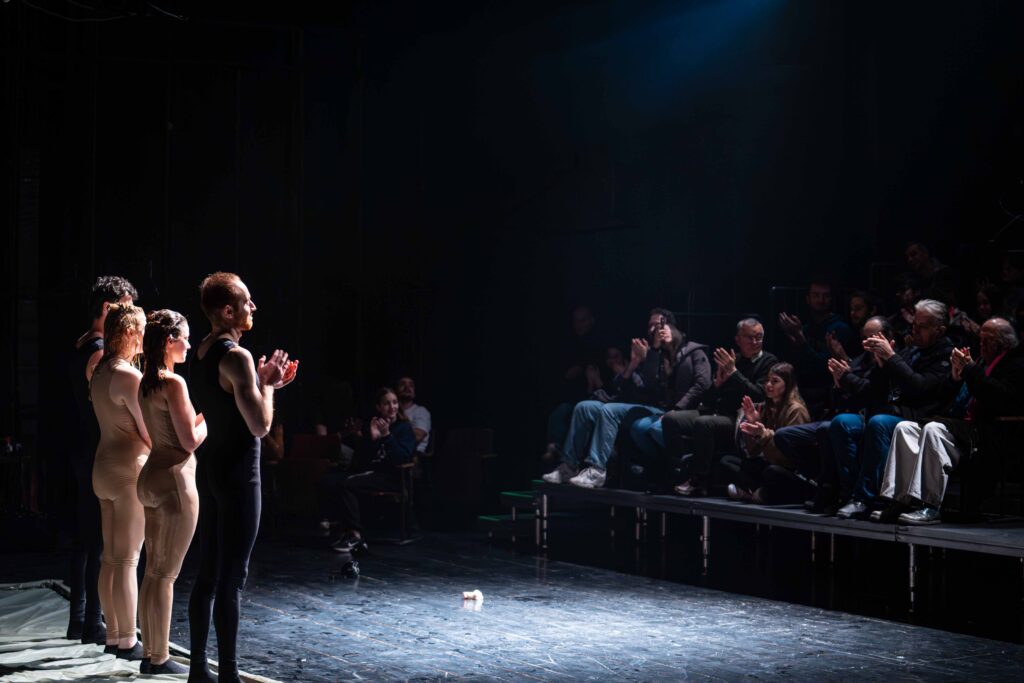
DROWNING OPHELIA
Direction and set design by Anastasia ‘Nana’ Dimitrova
Choreography by Gjordjia Niamova
Music: Maria-Viktoria Mitova
Cast: Neda Aleksov, Anastasia Dimitrova, Stefan Gyurov, Georgi Petkov
Teona Sima – Voice, Samantha
Operations Manager: Hristo Milev
Movement Аdvisor: Evgenia Trifonova
Lights Design: Alex Iliev and Victoria Taneva
Directorial Advisor: Nedyalko Delchev
NDNA Production, Bulgaria
The “Criticism” Programme is an initiative by Spam Studios, developed in partnership with Art Trema Fest as part of its 29th edition, and carried out with the financial support of the “Culture for Democracy” programme of the Swiss Embassy and the Hartefakt Fund in Serbia.