by Jovana Stanković
photo: Stefan Zdraveski
The 29th Art Trema Fest in Ruma opened with the performance “Life Is a Dream”, based on the text by Pedro Calderón de la Barca, directed and adapted by Dina Markova and performed by Teatar Zong from Bulgaria.
This philosophical drama by the “Spanish Shakespeare” has been transposed by the young authorial duo, Dina Markova and Bojan Arsov, into a timeless story about a dream—a prince who dreams he is an abandoned child, or an abandoned child who dreams he is a prince. The dramaturgy of the piece is particularly inventive: the character of Stella is entirely omitted (and, within this concept, not missed), while the text itself is carefully adapted to match the expressive language the creative team sought to achieve. That team—director Dina Markova and Bojan Arsov, responsible for stage movement and choreography—builds a distinct theatrical form rooted in physicality and atmosphere.
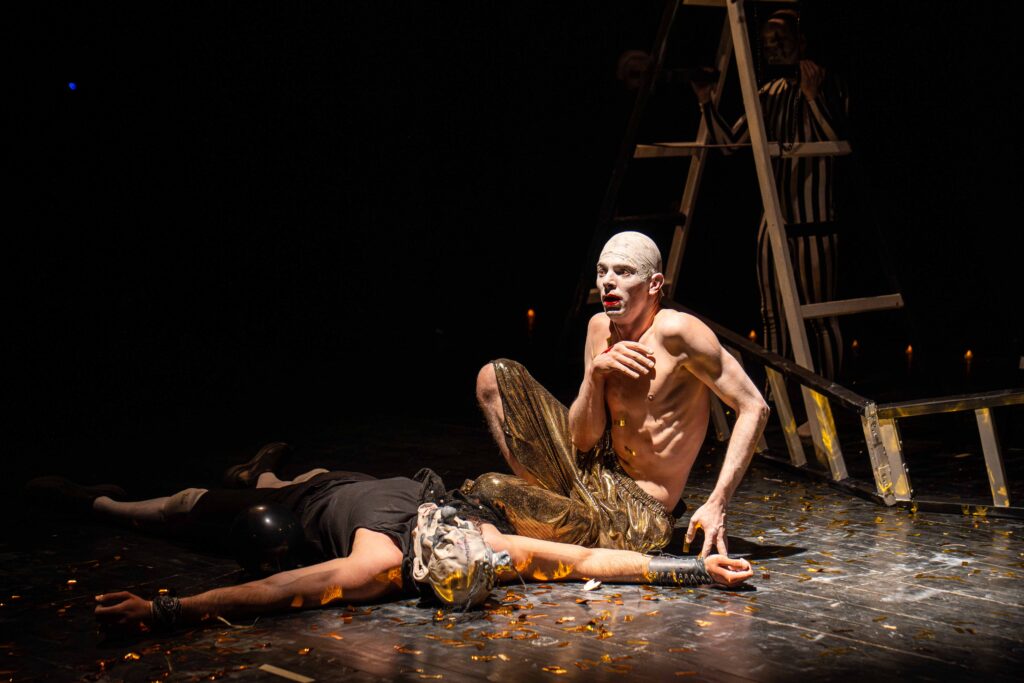
A dark, almost horror-like ambiance defines the performance, becoming even more powerful in the intimate setting of the festival staging—suggesting that such a chamber space may be ideal for future performances as well. This eerie mood is reinforced by costume and scenography: a smoke-filled stage, black-and-white visual compositions, a beginning told through pantomime, and music that intensifies the sense that evil is omnipresent. The set is composed of ladders that, in shifting formations, become both animate and inanimate elements—at one moment a tower, at another Sigismund’s wings and his freedom.


Despite its strong visual and conceptual language, the performance ultimately centers on Bojan Arsov as Sigismund, whose precise and bravura interpretation relies heavily on physical expression and choreography. Through this, the spoken text gains additional clarity, as the dramatic action is equally legible in the body. A particularly compelling layer of the play lies in its political dimension, embodied in the prophecy given to Basilio, Sigismund’s father—that his son will become a tyrant if he ascends to power. In response, Basilio imprisons him, only to later bring him—drugged—into the court to test how he would rule. Thus, beyond a story about dreams, the play becomes a meditation on evil: whether it can be prevented through total isolation from reality, or whether it is inevitably present among us. A glimmer of hope and light emerges through the sound of the harp, performed live on stage by Irina Prvanova.
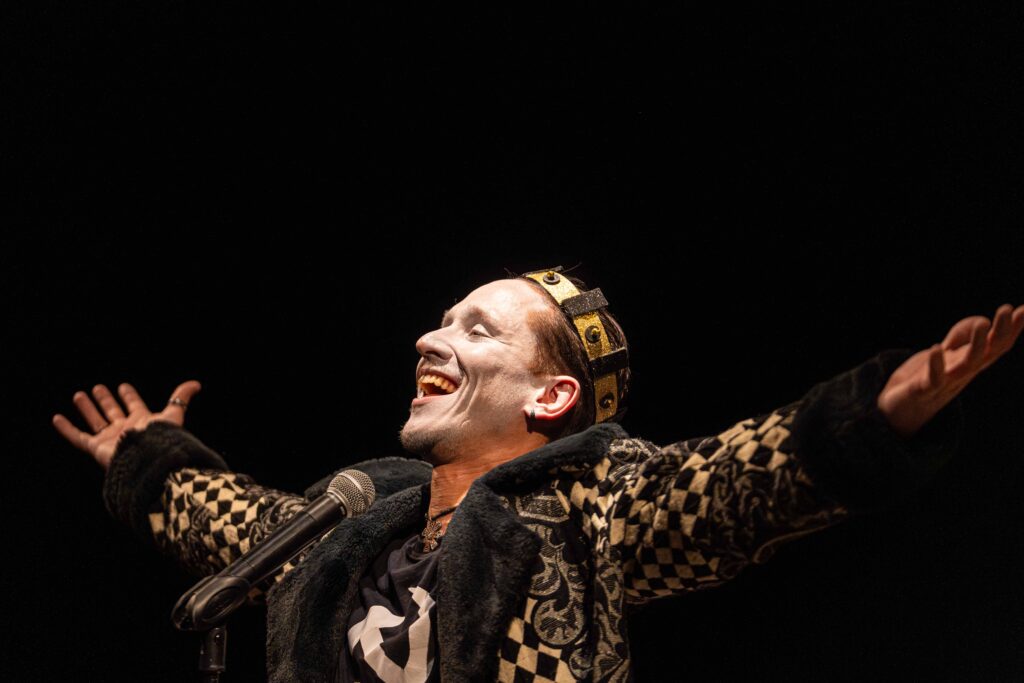
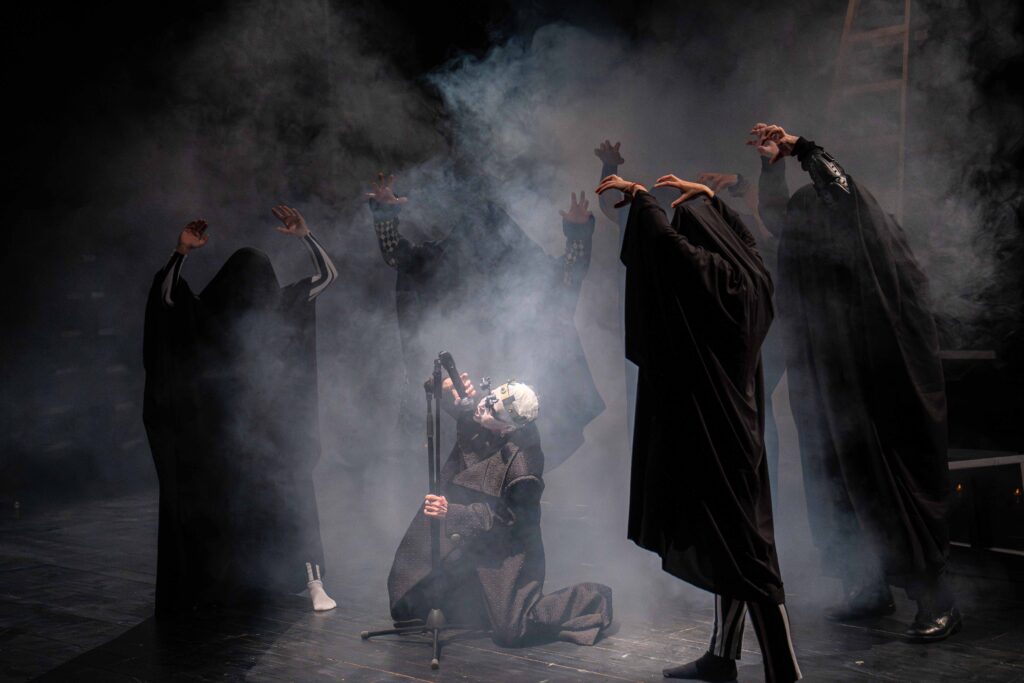
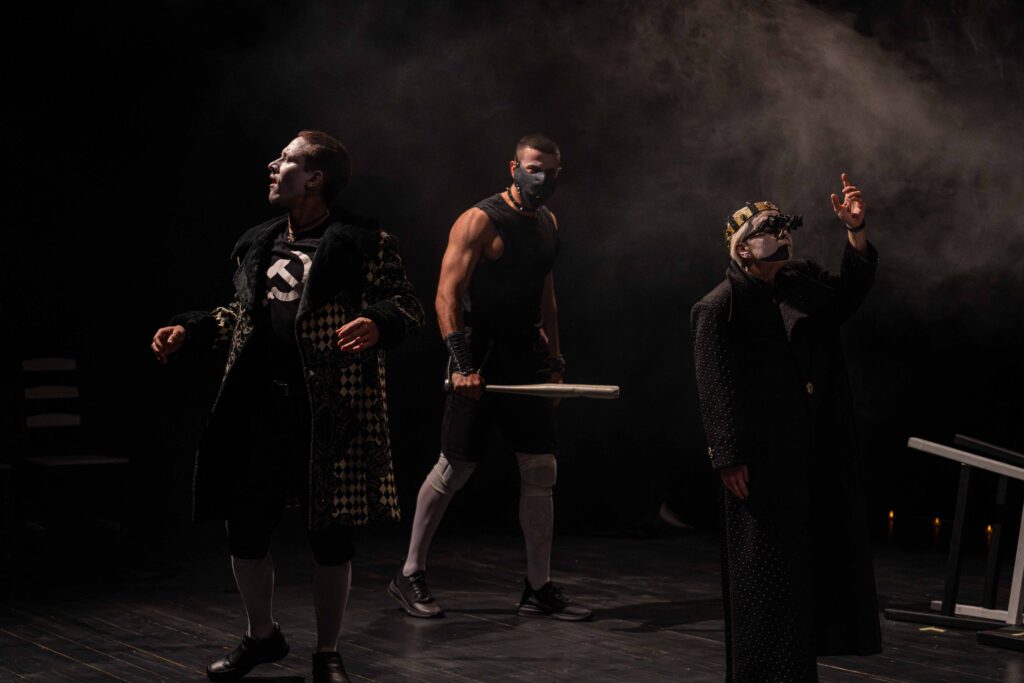
“Life Is a Dream” by the Bulgarian Teatar Zong is a powerful and compelling reflection on humanity, power, evil, and dreams—Sigismund’s, but also our own. It leaves us questioning whether everything we dream of is truly something we wish to realize, or whether some things are better left in the realm of fiction.
Tyranny must be resisted—but can this be achieved by isolating a potential tyrant from reality, only to later cast him into the fire among people? Hardly. It seems that such a path may, in fact, make tyranny more likely—like a form of revenge by a mistreated student. In closing, I return to the line that opens the performance: “Earth. Europe. Poland. Year? Irrelevant.” Tyranny is always the same, wherever it appears, in whatever place, and in whatever time. And perhaps it can only be undone through dreams.
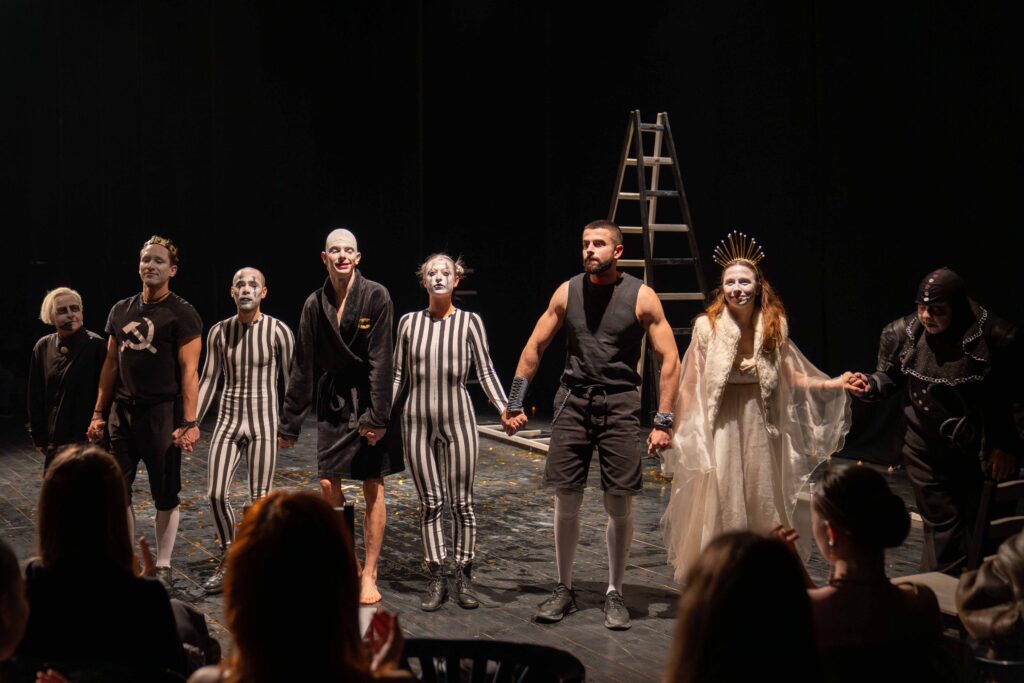
“LIFE IS A DREAM” – an anti-utopian horror fairytale based on the play by Pedro Calderón de la Barca
based on the translation by Stoyan Bakardzhiev
Adaptation and Direction: Dina Markova
Visual Environment and Costumes: Bojan Arsov
Choreography and Movement: Bojan Arsov
Cast: Bojan Arsov, Vyara Kolarova, Konstantin Ikonomov, Ralitsa Petrova, Rumen Mihaylov, Pavel Emilov, Aleksandar Andreev, Irina Prvanova – harp
The “Criticism” Programme is an initiative by Spam Studios, developed in partnership with Art Trema Fest as part of its 29th edition, and carried out with the financial support of the “Culture for Democracy” programme of the Swiss Embassy and the Hartefakt Fund in Serbia.