by Marta Djordjevic
photo: Stefan Zdraveski
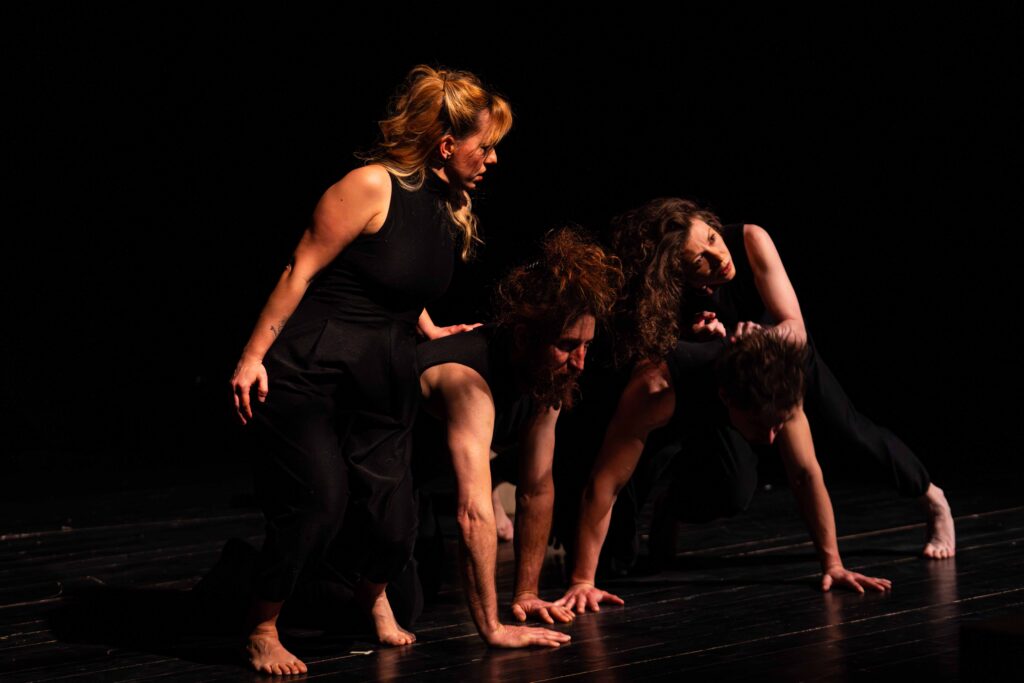
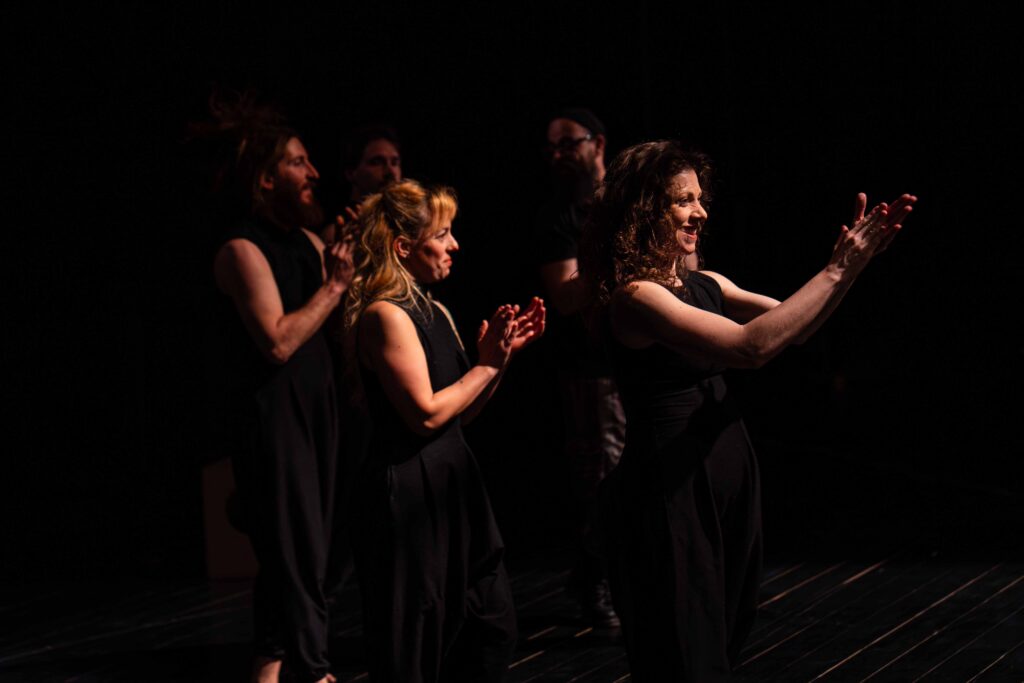
On the fifth day of the festival, the dance performance Danceperimental, produced by Muzotanz Dance Company from Bulgaria and directed by Ina Gerginova, was presented. The piece functions as an open improvisational structure in which the audience actively shapes the course of events, making each performance inherently unique. On stage are four dancers (Ina Gerginova, Mariana Kapustianova, Ivan Nanov, and Velizar Gruev), along with musician Alexander Evtimov (Shamancheto), an armchair, and a telephone that serves as the central prop and an invitation to participate. When the phone rings, a member of the audience takes the seat, answers the call, and shares their current state, thoughts, or feelings with the performers. This spoken impulse, delivered through the receiver, becomes the starting point for an improvised dance interpretation—a kind of stage translation of the participant’s inner world.
Without the audience’s voice, this performance cannot take place, which gives it a high degree of risk from the outset, but also great potential. I entered the space with skepticism, wondering whether such a concept could generate meaning out of chaos, whether improvisation here was merely a demonstration of performative skill or carried genuine artistic content, and whether audience participation functioned as a true dramaturgical tool or simply as an entertaining device.
The answer to at least one of these questions came very quickly. The audience in Ruma did not settle for safe distance or superficial play; they courageously stepped onto the stage and shared fears, intimate dilemmas, and emotions related to the current political situation. In doing so, they sharpened the performance, guiding it toward a more serious and emotionally demanding register than its initially almost mystifying tone might have suggested. It became clear that the audience here is neither decoration nor a supporting element of entertainment, but an equal co-author of the theatrical event.
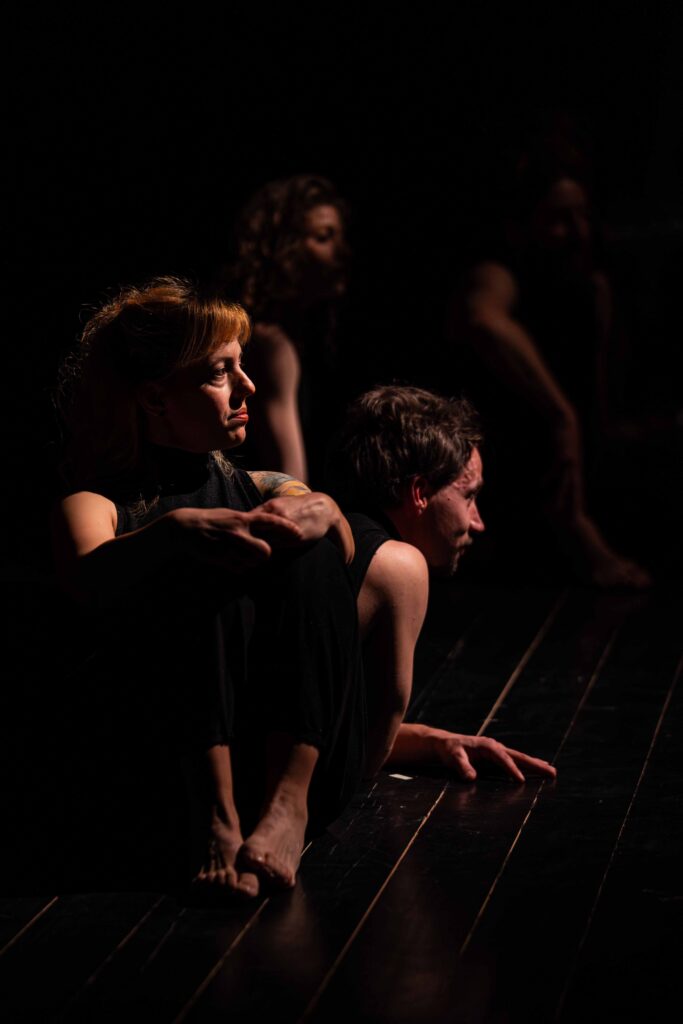
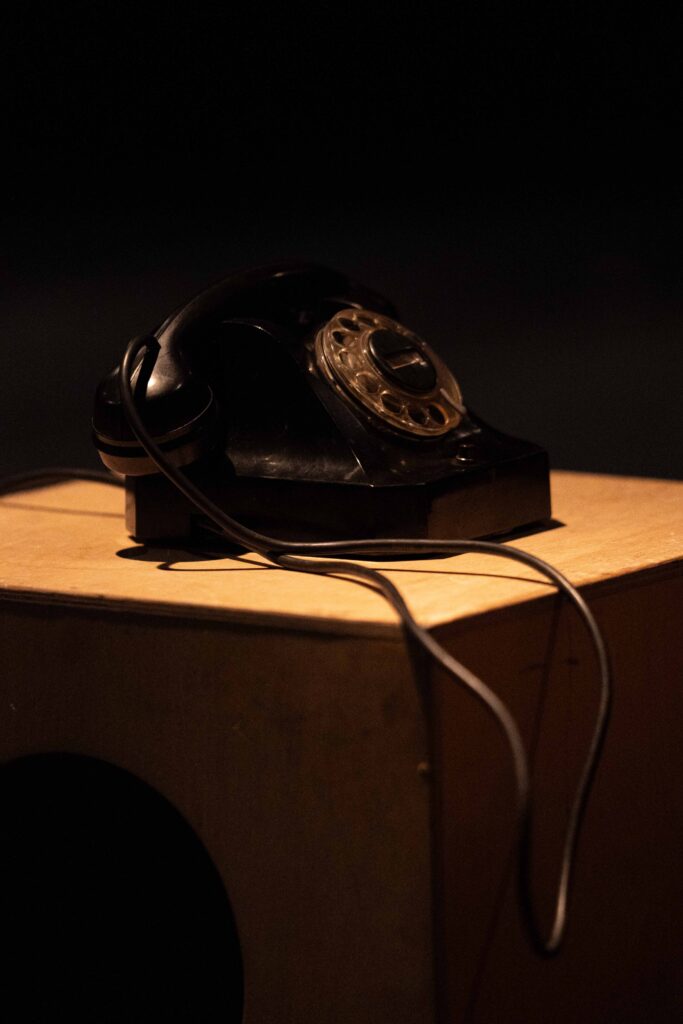
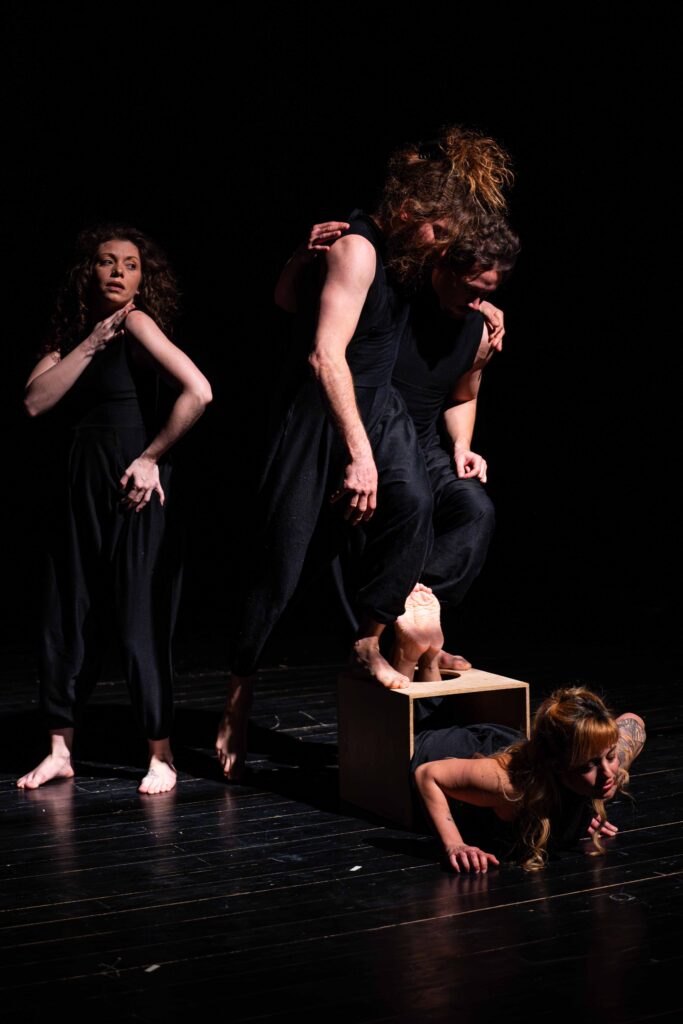
The performers demonstrate a remarkable level of mutual trust and stage intelligence. The way the dancers listen to, follow, and respond to one another creates the impression of a collective mind, blurring the boundary between individual impulse and group composition. It is precisely this precision within spontaneity that allows the improvisation to feel truly immediate, rather than a sequence of pre-prepared patterns. The spectator has the sense of witnessing something that is being created in front of them for the first and only time, which generates a feeling of uniqueness.
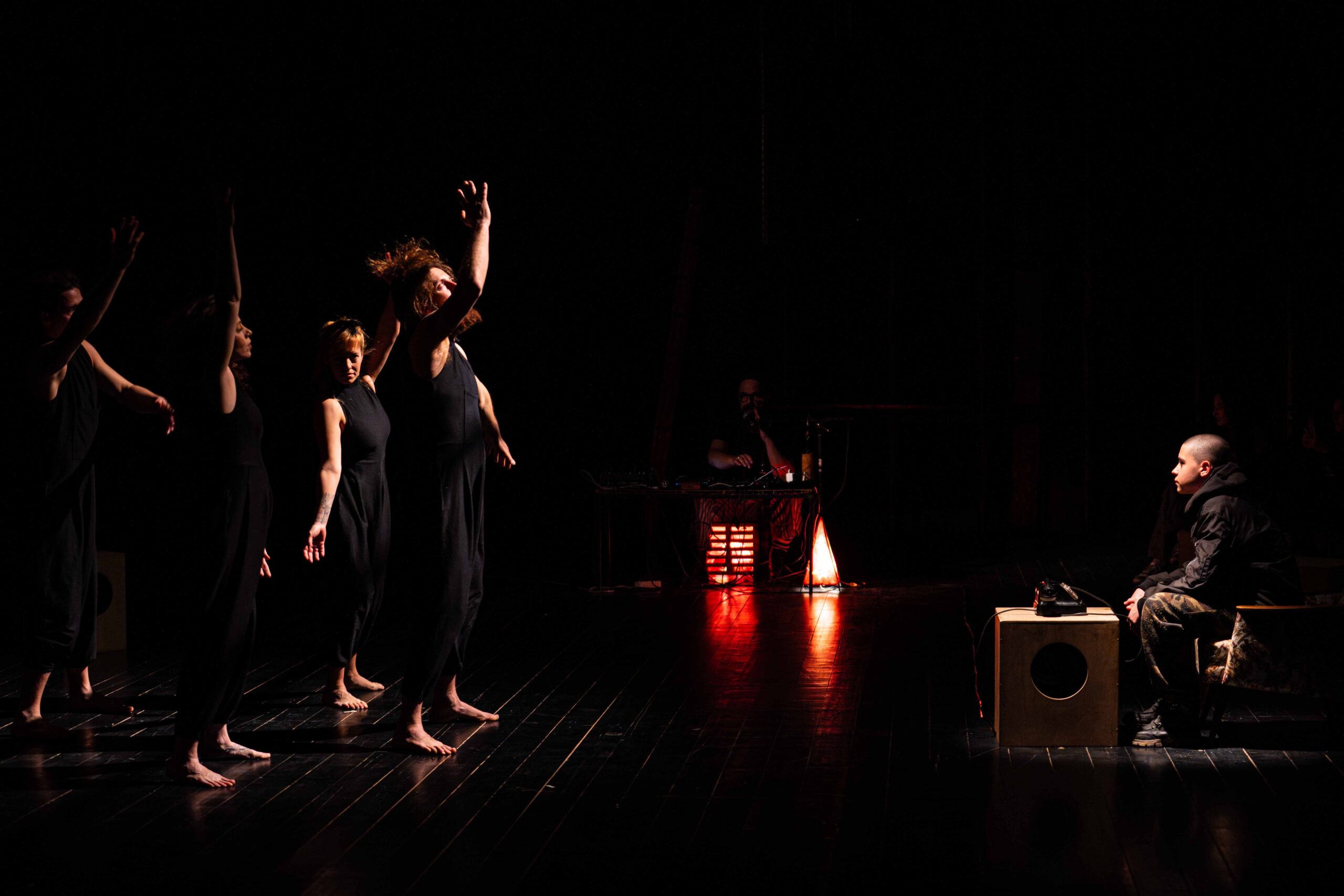
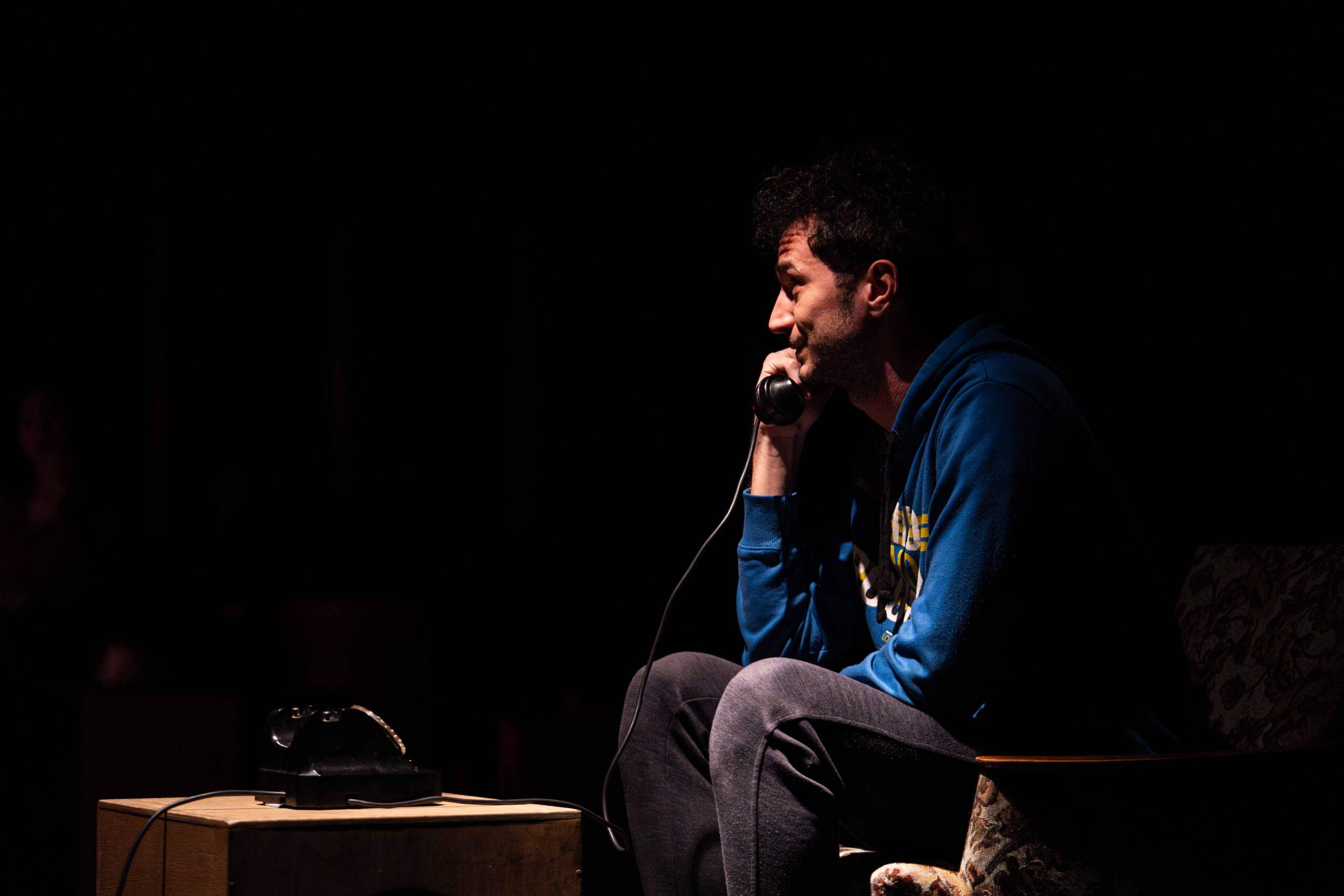
The relationship between the audience participants and the stage is also handled successfully. Although sitting in a centrally placed armchair under the spotlight could easily produce discomfort, the carefully designed lighting and sound create a safe and intimate atmosphere, transforming potential exposure into a sense of trust.
Danceperimental confirms that improvisation in contemporary dance does not have to be a mere display of skill, nor does audience participation necessarily lead to the trivialization of form. On the contrary, when an open structure is supported by clear rules, performative precision, and an audience willing to truly engage, a theatrical event emerges that belongs equally to performers and spectators. For this reason, this dance experiment succeeds in transcending its own concept and becomes an authentic reflection of the space, time, and community in which it is performed.
The “Criticism” Programme is an initiative by Spam Studios, developed in partnership with Art Trema Fest as part of its 29th edition, and carried out with the financial support of the “Culture for Democracy” programme of the Swiss Embassy and the Hartefakt Fund in Serbia.